Strengthen cross-border connectivity
Strengthen cross-border connectivity between Spain and France through new dedicated fiber infrastructure.



Cross-border fibre optic infrastructure project designed to reinforce international connectivity and strengthen the resilience of digital infrastructure in Southern Europe.

The Fibre Optic Corridor between France and Spain (FOCFS) is an EU co-funded project under the Connecting Europe Facility (CEF Digital) programme, implemented by lyntia, to strengthen cross-border connectivity through a strategic, high-capacity and redundant fibre-optic route. It deploys an alternative terrestrial corridor supporting growing data traffic, enhancing competition and aligning with EU goals for resilient and integrated digital infrastructures.
Strengthen cross-border connectivity between Spain and France through new dedicated fiber infrastructure.
Increase route diversity and digital infrastructure resilience by providing an additional independent corridor.
Improve interconnection capacity between networks and digital ecosystems across the Spain–France border.
Support long-distance high-capacity optical transport through fully underground G.652D fiber.
Contribute to a more robust European connectivity framework, aligned with EU digital infrastructure policy.
FOCFS — France–Spain Connectivity Corridor
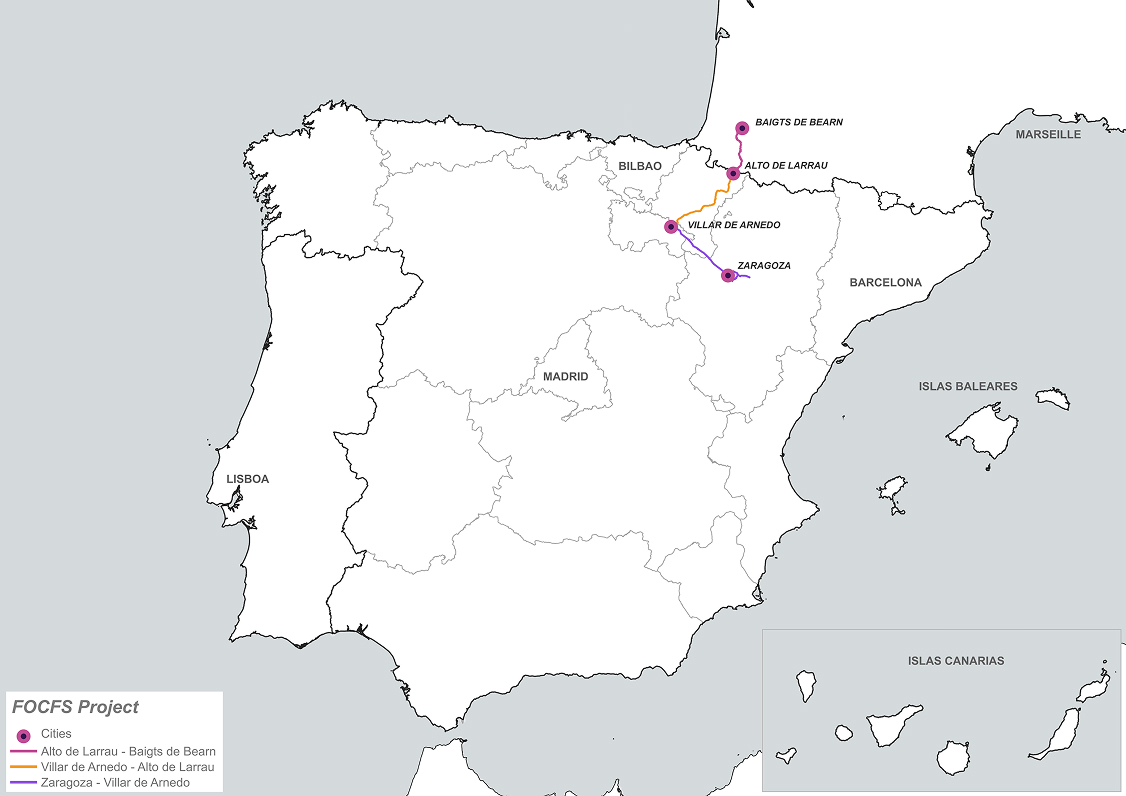
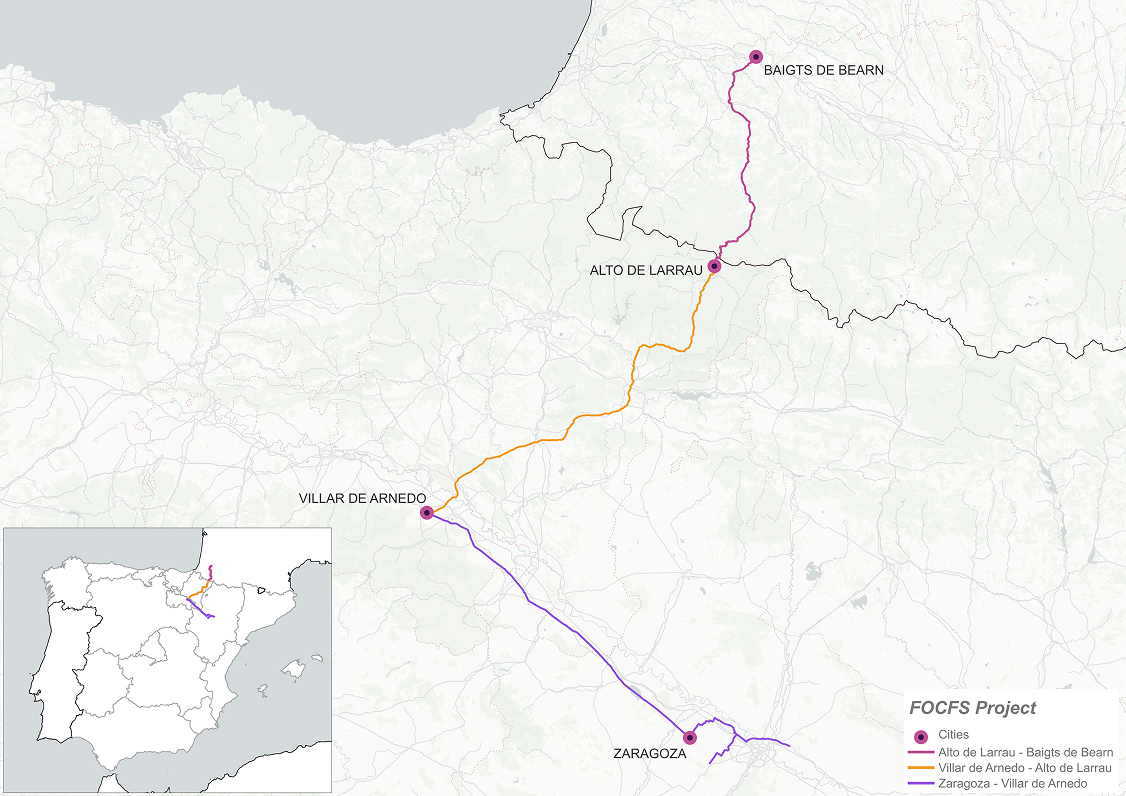
Illustrative representation of the FOCFS connectivity corridor between Spain and France.

FOCFS contributes to the development of a more resilient and diversified connectivity ecosystem in Europe by creating an additional cross-border infrastructure corridor between Spain and France. The project enhances route diversity, supports international data transport and reinforces the strategic role of Southern Europe within the wider European digital infrastructure landscape.
The infrastructure developed through FOCFS is designed to facilitate interconnection with telecommunications operators and digital infrastructure ecosystems, supporting the transport of data across borders and enabling greater flexibility for international connectivity architectures.
The route is designed to serve hyperscalers and major telecommunications operators, providing a neutral, high-capacity dark fibre infrastructure tailored to the requirements of global cloud service providers.
The route enables the transport of international data flows between Iberian and Central European networks, supporting long-haul and regional carriers.
Five network centres distributed along the route provide physical presence points accessible for equipment installation and interconnection.

The FOCFS project is co-funded by the European Union. Views and opinions expressed are however those of the author(s) only and do not necessarily reflect those of the European Union or the European Executive Agency for Health and Digital (HaDEA). Neither the European Union nor HaDEA can be held responsible for them.