

23 Oct How terrestrial fibre networks complement subsea cables
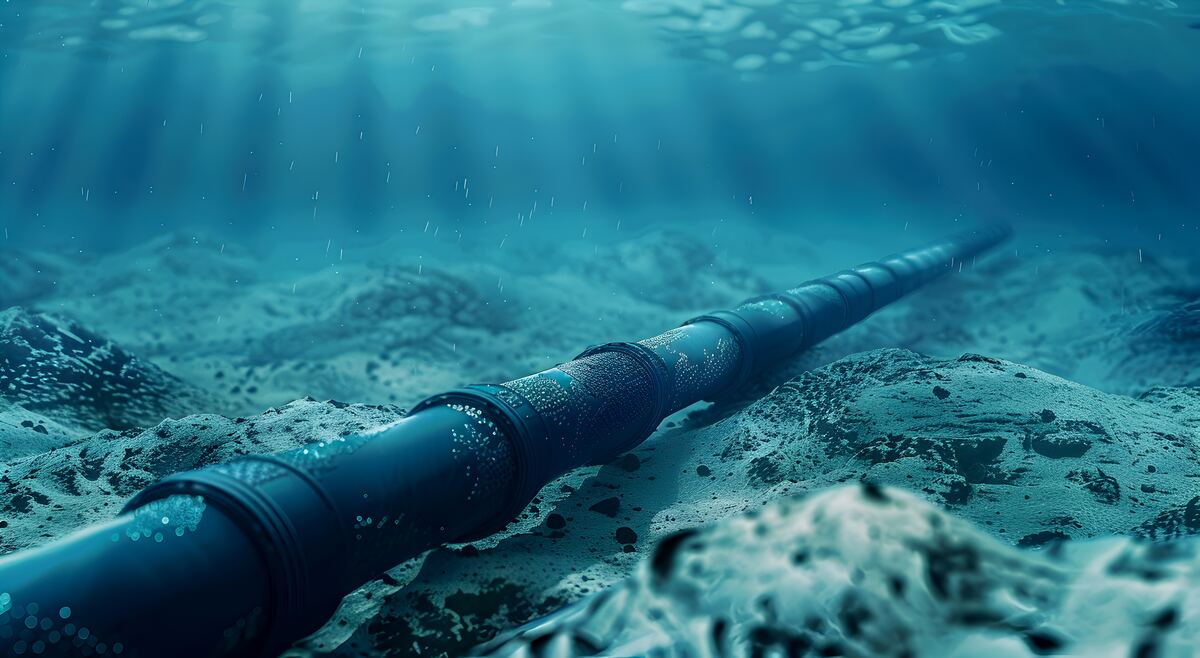
Over 99% of intercontinental data traffic does not travel via satellite, but submerged in the depths of the oceans. Subsea cables form the true superhighways of global information, connecting continents and carrying the massive petabyte volumes that underpin e-commerce, cloud platforms, and global telecommunication services worldwide.
However, these major oceanic arteries cannot complete the mission alone. Reaching the coast is only half the journey: for information to reach end users and corporate data centres, it relies on a terrestrial infrastructure that is equally powerful, widespread, and resilient.
From coast to inland: The role of Cable Landing Stations
When a subsea fibre cable emerges from the seabed and makes landfall, it connects directly to a Cable Landing Station (CLS). This technical facility serves as the neutral mooring and conversion point where the marine optical signal connects into the terrestrial network.
The invisible link into the heart of the continent
It is at this precise location that the terrestrial fibre network takes over. From the landing station, information must be carried inland at ultra-high speed towards major interconnection hubs and urban data centres.
If the terrestrial backhaul network fails to offer equivalent bandwidth or introduces bottlenecks in transmission capacity, the immense speeds achieved across the ocean are lost on the very first leg on dry land. Having dedicated, ultra-high-capacity fibre access from coastal landing zones is therefore essential for seamless international traffic flow.
The Iberian Peninsula as a strategic digital hub between continents
Thanks to its privileged geographical location, the Iberian Peninsula has established itself as the key gateway for communications linking the Americas, Europe, and Africa.
Direct link connecting Spain, Europe, and Africa
The arrival of new, next-generation subsea cable systems on Spanish shores positions the region as a central node for global interconnection. lyntia’s dense fibre optic network acts as the essential terrestrial bridge, picking up intercontinental traffic at coastal landing points and distributing it efficiently across the rest of Europe, guaranteeing a direct, stable, and low-latency route to major European data centres.
Physical redundancy and protection against oceanic outages
Subsea cables face multiple physical hazards on the seabed, ranging from ship anchors and fishing nets to seismic activity and potential sabotage. A break in a primary subsea line can isolate entire regions if alternative transit routes are unavailable.
In this scenario, the architecture of the terrestrial transport network is decisive for global resilience:
- Redundant ring topologies: Geographically diverse onshore fibre rings enable international traffic to be rerouted immediately to alternative landing points or terrestrial paths if an outage occurs at sea.
- Automatic failover in milliseconds: Intelligent network management systems detect signal loss and switch data flows without noticeable interruption to critical enterprise services.
Minimal latency to Data Centres
For tech giants, global carriers, and cloud service providers, every millisecond counts. Direct, hop-free connections between subsea cable landing stations and the terrestrial backbone reduce latency to the absolute theoretical minimum.
By eliminating intermediaries and optimizing optical fibre routes on the ground, data arriving from other continents reaches destination data centres in record time, ensuring peak performance for real-time applications, financial transactions, and massive data exchanges.