

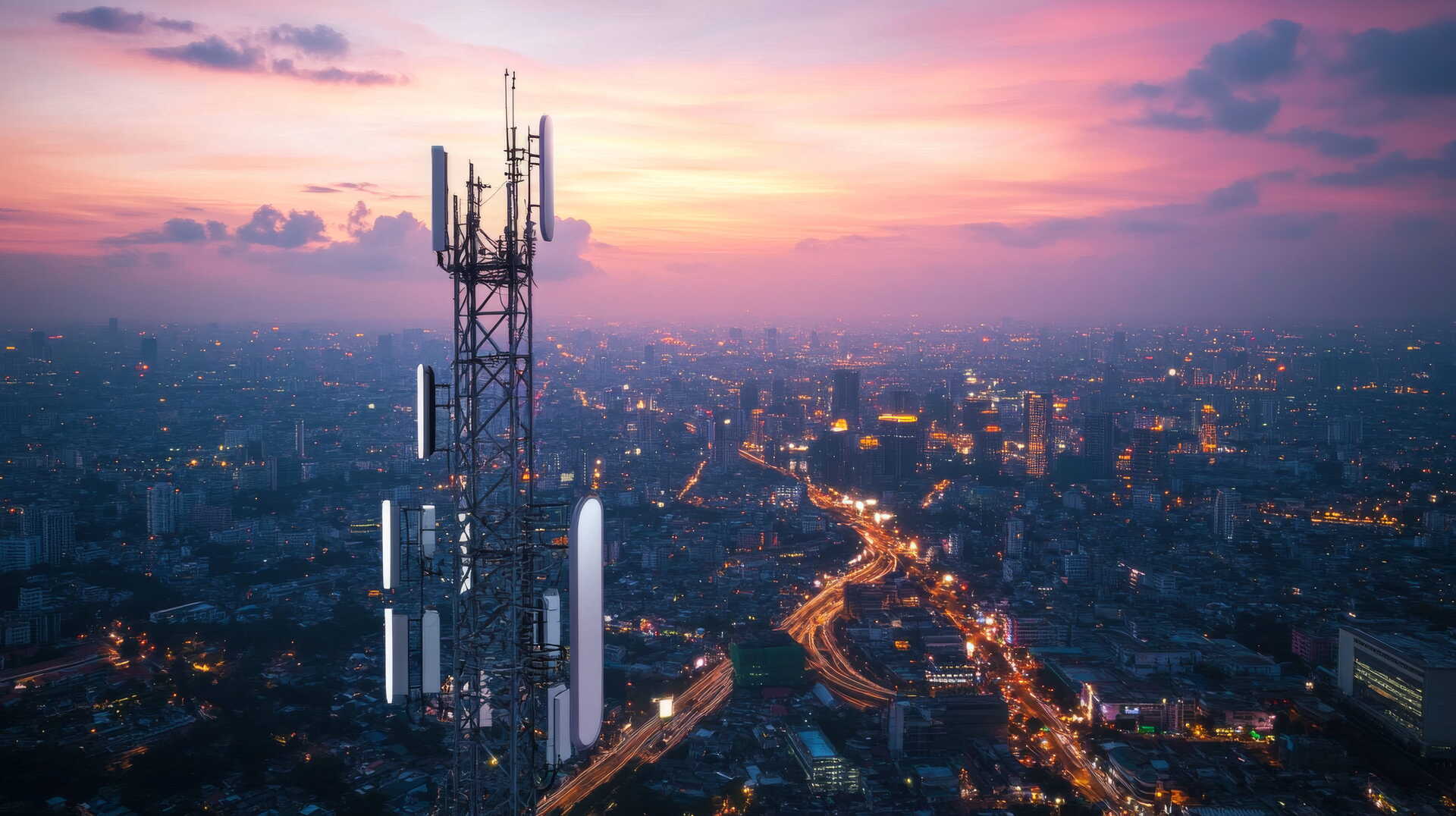
25 Sep Benefits and changes of 5G technology versus 4G
The leap from 4G to 5G is not merely moving from a smartphone to a slightly faster screen. We are witnessing a structural shift in telecommunications architecture. While previous generations were designed with consumers and content consumption in mind, 5G was born with an industrial and enterprise focus: connecting infrastructure, automating processes, and moving massive volumes of information almost instantaneously.
Understanding the difference between 4G and 5G is key for organisations planning their technology strategy for the coming years.
Performance and transmission speed
When analysing what difference there is between 4G and 5G, raw speed usually makes the first headline. However, the real impact is not streaming high-definition video without buffering, but the capacity to transform an entire business’s operations.
Bandwidth in corporate practice
4G LTE technology reached a reasonable operational ceiling, with average speeds hovering between 20 and 100 Mbps. Useful for daily office tasks, but insufficient when dozens of mission-critical systems compete for the same channel.
In contrast, fifth-generation networks multiply that transmission capacity tenfold in real-world environments, with theoretical peaks reaching up to 10 Gbps. This enables businesses to send heavy renders, complex databases, or high-resolution industrial video streams without choking the network.
Ultra-low latency: Real-time communications
In many industrial processes, download speed takes a back seat if network response time lags. That is where latency marks the true divide between both technologies.
From human delay to machine real-time
4G operates with an average delay of between 30 and 50 milliseconds. For someone browsing the web, this lag is imperceptible. But for a robotic arm on an assembly line or an autonomous vehicle in a logistics warehouse, that slight delay marks the difference between precision and failure.
5G reduces this delay to under 5 milliseconds (and even down to 1 ms in dedicated private architectures). This immediate response allows critical machinery to be coordinated remotely and enables remote engineering or surgical operations to be executed without error margins.
Network density and massive IoT deployment
Anyone who has tried sending a message in a packed stadium knows 4G’s weak spot: network saturation.
The fourth generation was designed to support a density of roughly 10,000 connected devices per square kilometre. In modern workplaces—where every employee carries a laptop, a smartphone, and a smartwatch, alongside hundreds of office sensors—4G cells quickly hit their limit.
The 5G standard changes the game. Its architecture manages up to one million devices per square kilometre without signal degradation. This breakthrough paves the way for large-scale Internet of Things (IoT) deployments, allowing entire industrial plants, smart cities, or transport fleets to be monitored in real time.
Fibre optics as the invisible backbone of 5G
A paradox exists in latest-generation mobile communications: for a wireless network to be exceptionally fast, it must rely on flawless terrestrial cabling.
5G antennas handle astronomical data flows that must be routed immediately to data centres. The only physical technology capable of offloading that traffic without creating bottlenecks is fibre optics (Fibre to the Tower or FTTT). Without a dense, well-distributed fibre backbone, 5G’s advantages in speed and latency would simply dissipate in the last mile.