

31 Jul How the internet reaches Spain via the seabed
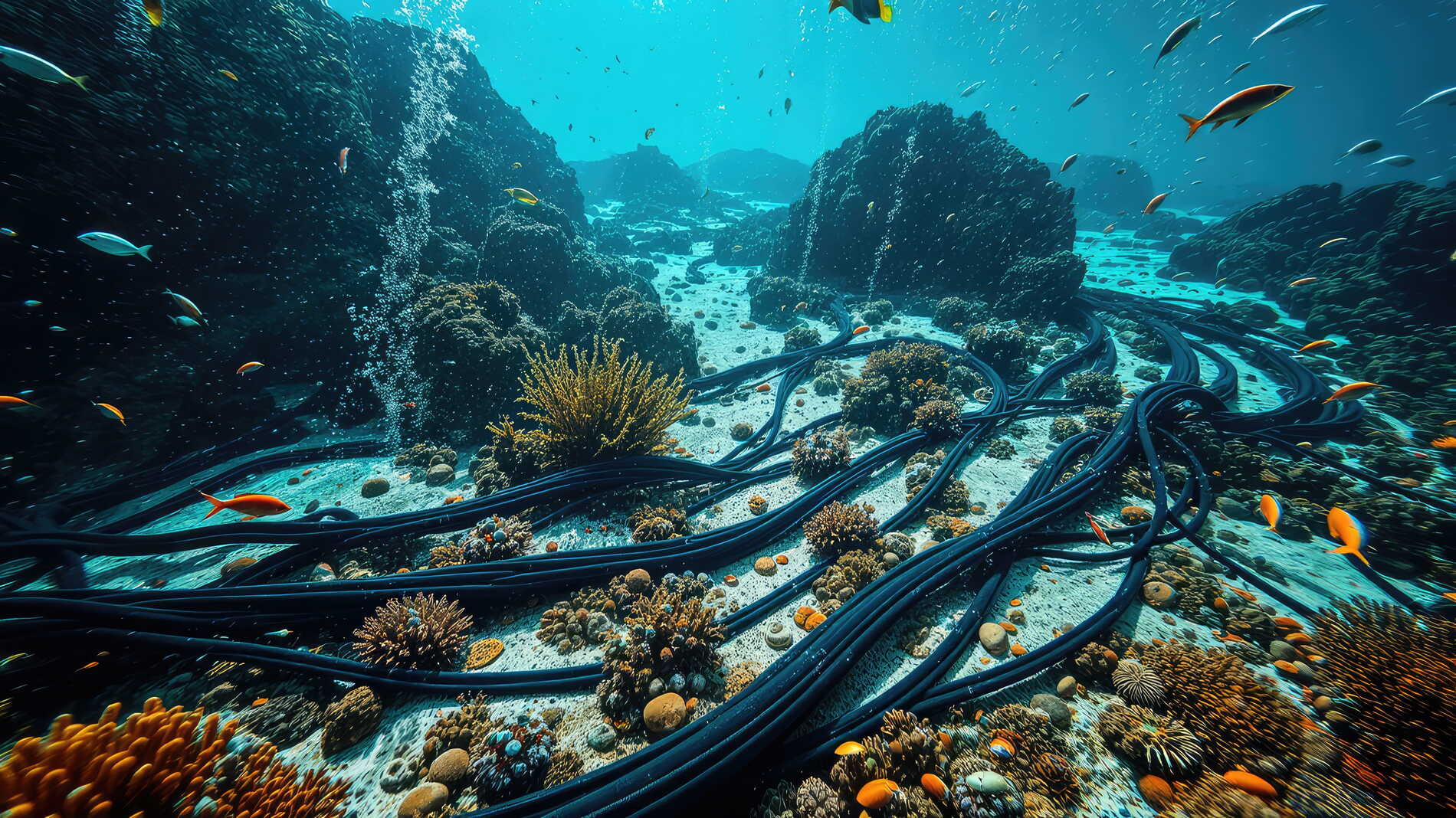
Although we tend to imagine the internet as an immaterial entity floating invisibly in outer space or running on next-generation satellites, reality is far more grounded. Or rather, ocean-bound. More than 95% of global data traffic—including emails, corporate cloud services, and international video conferences—travels across the ocean floor.
The global internet map is drawn by an immense network of critical infrastructures crossing the oceans. For a country with Spain’s geography, these undersea highways are the vital umbilical cord keeping us connected to the rest of the planet at the speed of light.
Spain as a digital Hub: The key to three continents
In recent years, the Iberian Peninsula has undergone an unprecedented digital metamorphosis, consolidating its position as the premier connectivity hub for Southern Europe. This privileged status is no coincidence; it is the result of an ideal, strategic geographical location.
Spain acts as the natural gateway and perfect landing point for major subsea cables linking markets in the Americas, Africa, and Asia. Cable landing stations in locations such as Bilbao (Sopelana), Barcelona, Valencia, and the Andalusian coast (featuring key nodes like Estepona) receive cutting-edge transatlantic connections. These directly link the peninsula with leading tech hubs like the United States, as well as emerging markets across the African continent.
From sea to land: The technical challenge of the landing point
The journey data takes through undersea internet cables represents a titanic feat of engineering. These fibre optic conduits—scarcely thicker than a human arm in coastal areas and as thin as a garden hose in abyssal depths—must withstand extreme pressure, marine currents, and maritime activity.
The transition process to the surface
As a transoceanic cable approaches the Spanish coast, the technical process to bring it ashore is metered to the millimetre:
- Guided by divers and specialised vessels, the cable leaves the water through horizontal directional drilling underground to avoid damaging the beach ecosystem.
- It reaches what is known as the Beach Manhole, the physical transition point where maritime infrastructure anchors to the land.
- From there, it is deployed to the Cable Landing Station (CLS), a highly secure facility where the light pulses—weakened after travelling thousands of kilometres—are amplified and prepared for terrestrial distribution.
The terrestrial connection: Bringing marine data to the data centre
A transatlantic cable on the coast loses all utility if the data remains trapped on the beach. The true value of subsea cables is unlocked when they connect to terrestrial fibre optic backbone networks.
Once international traffic hits the coastal landing station, it requires high-capacity, ultra-low-latency capillary infrastructure to distribute those massive volumes of data to the core data centres and business hubs further inland, or onwards to the rest of Europe. The deployment of robust, open-access terrestrial networks is the indispensable foundation needed to transform the capacity arriving via the ocean into real, secure, and efficient connectivity for local enterprises.
Global redundancy: Shielding the internet map
The resilience of the global network relies on diversification. Undersea internet cables are not exempt from risks—ranging from fishing boat anchors dragging along the seabed to submarine earthquakes fracturing the fibre lines.
However, the internet map is designed as a mesh network to prevent massive blackouts. Interconnecting networks ensure that if a transoceanic cable suffers physical damage in the Atlantic, automated routing systems instantly divert traffic through alternative undersea routes or peripheral terrestrial connections within milliseconds. This self-healing capability ensures that the business landscape can continue operating as normal, regardless of incidents occurring thousands of metres below sea level.